• Forum Notice: Threads are currently being reorganised and may be moved. Please checkout the new History section.

Picture Penzance

Why Smuggling Flourished in Penzance

  • 30
  • 0
Penzance, set on the rugged shores of Mount’s Bay, was not always the peaceful coastal town we know today. During the 18th and early 19th centuries, it became a hub of smuggling activity, largely due to a mix of geography, economy, and social acceptance.

Geography: Nature’s Perfect Hideaway


Mount’s Bay provided numerous secluded coves, hidden beaches, and caves, ideal for landing contraband under cover of darkness. From Bessemer Cove to Prussia Cove, smugglers had ready access to the sea while remaining hidden from customs patrols. The town’s proximity to European trade routes made it easier to transport goods directly from ships to the shore without detection.

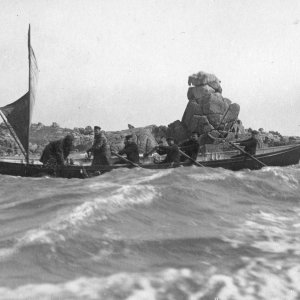
The coastline’s rugged cliffs and rocky inlets also acted as natural barriers, discouraging law enforcement from patrolling extensively. Local fishermen often doubled as smugglers or guides, giving them a “legitimate” cover while navigating these areas.

Suggested...

First Prefabricated House Opened on Treneere Estate, Penzance

  • 56
  • 0
The first prefabricated house on the Treneere Estate, Penzance, was officially opened on Thursday, in what is believed to be the first fully furnished home of its kind completed in Cornwall. The opening ceremony was attended by the Mayor, Alderman Robert Thomas, supported by the Chairman of the Housing Committee, Mr. P. T. Johnson, members of the Corporation, and representatives from neighbouring authorities including Falmouth, Penryn, Camborne-Redruth, and Kerrier. The Borough Engineer and Surveyor, Mr. J. H. Blight, and Housing Manager, Mr. J. C. Ungate, were also present. The key to the house was handed to the Mayor by Mr. S. Tucker, Clerk of the Works.

The house was opened to the public following the ceremony, and it drew widespread admiration. Visitors praised the home’s modern amenities, with many housewives commenting that it was “lovely” and noting that it offered more conveniences than other properties on the Treneere estate.

The...

WRECK OF TWO VESSELS EASTERN SHORES MOUNTS BAY 1881

  • 12,694
  • 1
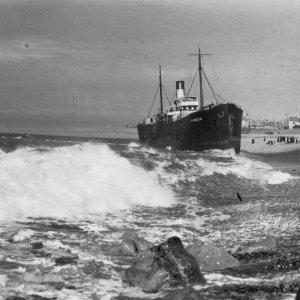
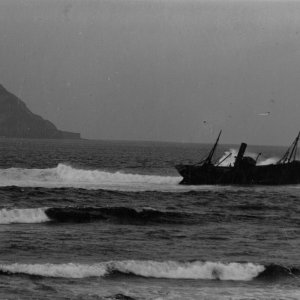
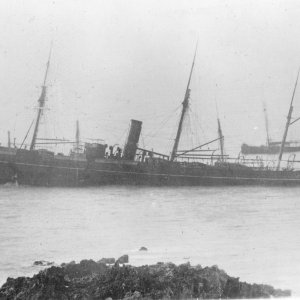
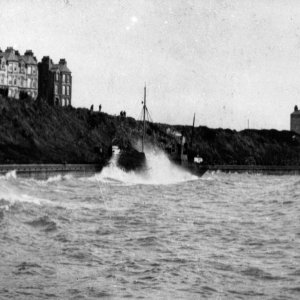
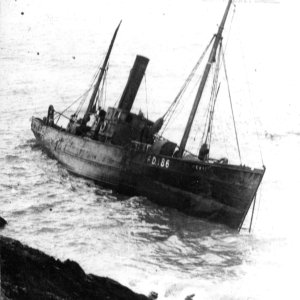
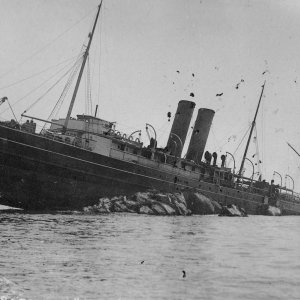
Uncertainty. During Sunday afternoon 13th February 1881 for those who were watching at the Quay and Coastguard Station observed a small vessel beating across Mount's Bay, evidently uncertain as to her whereabouts, and there was strong S.S.W. gale blowing, with fall of thick, misty rain, which made it impossible to see more than a very short distance, considerable anxiety was shown to her fate. Once or twice only did the rain clear sufficiently to enable the ship to be seen, and it was then discovered that she was brigantine (a two-masted sailing vessel, square-rigged on the foremast and having a fore-and-aft mainsail with square upper sails), apparently a foreigner, was standing towards the Mount under reefed topsails. At half-past five she was seen within a quarter of a mile of the Gear; seeing which she almost immediately tacked and again stood away towards the eastern land, having added the mainsail to her former spread of canvas. At seven o'clock rockets were fired and...

Penzance Jubilee Bathing Pool – Official Opening and History, 1935

  • 8,866
  • 0
Penzance celebrated a major milestone on 24th May 1935 with the official opening of the Jubilee Bathing Pool and Sun Lounge, located at the eastern end of the Promenade. The pool represented one of the most significant civic improvements in the history of the borough, both for residents’ enjoyment and the attraction of visitors.

The opening ceremony was conducted by Alderman J. W. Meek, former Mayor of Penzance, and attended by the Mayor, councillors, and a large gathering of townspeople. The event included aquatic demonstrations, swimming races, water polo matches, and a bathing belle parade.


Origins of the Scheme


  • The idea of improving the eastern Promenade arose from Alderman W. H. Julyan, who proposed the original Green Street improvement scheme decades earlier.
  • The plan evolved into the Battery Road Improvement, culminating in the creation of the Jubilee Bathing Pool.
  • The...

Newspapers and paper making and more

  • 2,013
  • 0
Penzance was not without newspapers in those days. They were: "Penzance Gazette," 1839; "Penzance Journal," 1848; "Cornish Telegraph,' 1850, that merged in the "Cornishman" Co. Other industries were, paper mills at Castle Horneck, a woollen cloth factory, between the orchard and Alverton House (Early in the 19th century). A pottery in Cornwall Terrace, worked by Mr. Slooman. Dying works run by Mr. Cara in Chapel Street, and the candle factories of Messrs. Higgs, Bodilly and Bromley, where tallow candles, known as "dips," were made mostly for miners' use. Higgs' factory was removed from the Weeths to Gulval, where Messrs. Bazeley carried on for some time. Messrs. Bazeley also had an ice factory at Gulval.

Miners hats were made in early days in a factory at the Abbey Slip, while Messrs. Michell, and Smith in more recent times, had factories behind their shops in Market Place and The Terrace. Lime kilns for burning lime, were situated at the bottom of Jennings Lane (Messrs. Davy)...

Welcome to Picture Penzance

Picture Penzance is your community-driven home for exploring the rich history of Penzance through photographs, stories, and shared memories. Whether you’re a local, a former resident, or simply curious about the town’s past, this is a place to discover how Penzance has grown, changed, and lived.

Membership is completely free. By registering, you can contribute your own images, add context to existing ones, and help preserve local history for future generations. We’re proudly ad-free, independent, and shaped by the people who care about Penzance most — the community itself.

Take a look around, and when you’re ready, join the community and become part of keeping Penzance’s story alive.

Why Smuggling Flourished in Penzance

  • 30
  • 0
Penzance, set on the rugged shores of Mount’s Bay, was not always the peaceful coastal town we know today. During the 18th and early 19th centuries, it became a hub of smuggling activity, largely due to a mix of geography, economy, and social acceptance.

Geography: Nature’s Perfect Hideaway


Mount’s Bay provided numerous secluded coves, hidden beaches, and caves, ideal for landing contraband under cover of darkness. From Bessemer Cove to Prussia Cove, smugglers had ready access to the sea while remaining hidden from customs patrols. The town’s proximity to European trade routes made it easier to transport goods directly from ships to the shore without detection.

The coastline’s rugged cliffs and rocky inlets also acted as natural barriers, discouraging law enforcement from patrolling extensively. Local fishermen often doubled as smugglers or guides, giving them a “legitimate” cover while navigating these areas.

Suggested...

First Prefabricated House Opened on Treneere Estate, Penzance

  • 56
  • 0
The first prefabricated house on the Treneere Estate, Penzance, was officially opened on Thursday, in what is believed to be the first fully furnished home of its kind completed in Cornwall. The opening ceremony was attended by the Mayor, Alderman Robert Thomas, supported by the Chairman of the Housing Committee, Mr. P. T. Johnson, members of the Corporation, and representatives from neighbouring authorities including Falmouth, Penryn, Camborne-Redruth, and Kerrier. The Borough Engineer and Surveyor, Mr. J. H. Blight, and Housing Manager, Mr. J. C. Ungate, were also present. The key to the house was handed to the Mayor by Mr. S. Tucker, Clerk of the Works.

The house was opened to the public following the ceremony, and it drew widespread admiration. Visitors praised the home’s modern amenities, with many housewives commenting that it was “lovely” and noting that it offered more conveniences than other properties on the Treneere estate.

The...

WRECK OF TWO VESSELS EASTERN SHORES MOUNTS BAY 1881

  • 12,694
  • 1
Uncertainty. During Sunday afternoon 13th February 1881 for those who were watching at the Quay and Coastguard Station observed a small vessel beating across Mount's Bay, evidently uncertain as to her whereabouts, and there was strong S.S.W. gale blowing, with fall of thick, misty rain, which made it impossible to see more than a very short distance, considerable anxiety was shown to her fate. Once or twice only did the rain clear sufficiently to enable the ship to be seen, and it was then discovered that she was brigantine (a two-masted sailing vessel, square-rigged on the foremast and having a fore-and-aft mainsail with square upper sails), apparently a foreigner, was standing towards the Mount under reefed topsails. At half-past five she was seen within a quarter of a mile of the Gear; seeing which she almost immediately tacked and again stood away towards the eastern land, having added the mainsail to her former spread of canvas. At seven o'clock rockets were fired and...

Penzance Jubilee Bathing Pool – Official Opening and History, 1935

  • 8,866
  • 0
Penzance celebrated a major milestone on 24th May 1935 with the official opening of the Jubilee Bathing Pool and Sun Lounge, located at the eastern end of the Promenade. The pool represented one of the most significant civic improvements in the history of the borough, both for residents’ enjoyment and the attraction of visitors.

The opening ceremony was conducted by Alderman J. W. Meek, former Mayor of Penzance, and attended by the Mayor, councillors, and a large gathering of townspeople. The event included aquatic demonstrations, swimming races, water polo matches, and a bathing belle parade.


Origins of the Scheme


  • The idea of improving the eastern Promenade arose from Alderman W. H. Julyan, who proposed the original Green Street improvement scheme decades earlier.
  • The plan evolved into the Battery Road Improvement, culminating in the creation of the Jubilee Bathing Pool.
  • The...

Newspapers and paper making and more

  • 2,013
  • 0
Penzance was not without newspapers in those days. They were: "Penzance Gazette," 1839; "Penzance Journal," 1848; "Cornish Telegraph,' 1850, that merged in the "Cornishman" Co. Other industries were, paper mills at Castle Horneck, a woollen cloth factory, between the orchard and Alverton House (Early in the 19th century). A pottery in Cornwall Terrace, worked by Mr. Slooman. Dying works run by Mr. Cara in Chapel Street, and the candle factories of Messrs. Higgs, Bodilly and Bromley, where tallow candles, known as "dips," were made mostly for miners' use. Higgs' factory was removed from the Weeths to Gulval, where Messrs. Bazeley carried on for some time. Messrs. Bazeley also had an ice factory at Gulval.

Miners hats were made in early days in a factory at the Abbey Slip, while Messrs. Michell, and Smith in more recent times, had factories behind their shops in Market Place and The Terrace. Lime kilns for burning lime, were situated at the bottom of Jennings Lane (Messrs. Davy)...

The tanning industry

  • 2,337
  • 2
THE TANNING INDUSTRY. Chy an dour, too, was formerly the tannery owned by the Messrs. Bolitho. In addition to local hides, their ships brought foreign hides, and these would be caned from the beach at Ponsandane, where the ships would run in on the sand and discharge at low water. Then there was Cunnack's tan yard near the Victoria Hotel (later renamed the Railway Hotel in 1935 and today known as the longboat Hotel), and also in the 17th century, a tan yard stood in the ground between John Batten's house, in Chapel Street and New Street, and was owned by a man named Roberts. Cunnack’s were also curriers, and later on this trade was carried on by Messrs. J. H. Rowe, W. Richards and Son, Lanyon and Edmonds. Then there were the shoemakers, a numerous company, sufficiently important to have a special benefit society of their own. They conducted much their business from stalls in the streets, a form of trade much vogue for that century in Penzance.
A saying was,
Bought...

Forum statistics

Threads
12,314
Messages
16,798
Members
8,452
Latest member
andyh12346
Back
Top